Bow Embroidery Design
A Graceful Detail That Earns Its Place on Real Projects
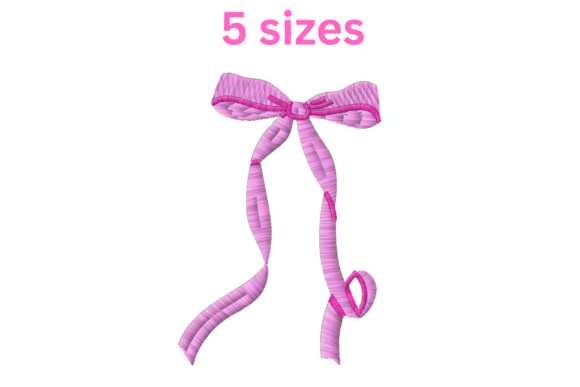
As someone who’s stitched hundreds of designs across apparel, baby items, and boutique merchandise, I opened the Bow Embroidery Design file expecting charm—and found something more: quiet confidence. It doesn’t shout. It settles in—soft curves, balanced proportions, a ribbon that flows like it remembers how silk drapes. This isn’t a novelty bow; it’s a design with poise. I tested it on a linen tea towel first, then moved to a midweight cotton sweatshirt for a custom order—and each time, it held its shape without stiffness or visual clutter.
Where It Lives Best: Context Is Everything
The Bow Embroidery Design shines where intention meets intimacy: personalized baby onesies, embroidered aprons for a local bakery, minimalist tote bags for a wellness brand, or delicate pillow covers for nursery decor. Its classic beauty fits naturally in the Beauty category—not because it’s flashy, but because it enhances without competing. On a cream-colored organic cotton cap? Elegant. As a standalone motif on a holiday kitchen towel? Warm and timeless. As part of a small-batch collection for an Etsy shop? It reads as thoughtful, not templated.
I recently used it as the central motif on a set of embroidered tea towels for a bridal shower gift. Paired with subtle monogram initials (stitched separately), the bow anchored the composition—neither too dainty nor too dominant. Customers noticed it immediately, not as “just a bow,” but as a detail that signaled care. That’s the quiet power of this machine embroidery design: it elevates the handmade product by reinforcing intentionality.
What Holds Up—And What Needs a Second Look
In real-world embroidery project conditions, the Bow Embroidery Design performs consistently well on stable, medium-weight fabrics—think cotton poplin, twill, denim, and midweight knits with proper stabilizer. On a structured tote bag, it stitched cleanly with crisp satin stitch edges and smooth fill stitch transitions. No puckering. No thread breaks—even at moderate speed.
But here’s where attention matters: on stretchy fabric like lightweight jersey or curved surfaces like baseball caps, test stitching is non-negotiable. The ribbon’s gentle curves rely on even tension—if the base fabric shifts mid-stitch, the flow distorts. Likewise, on dark fabric, confirm your thread colors provide enough contrast *before* hooping. A pale pink bow on navy looks dreamy in mockups—but only if your satin stitch density holds up under wash testing. I’ve seen this design lose softness after three home washes on thin cotton unless stabilized with tear-away + cut-away combo.
It’s also not ideal for tiny hoop sizes (< 4" diameter) without simplification. The inner loop and ribbon ends carry fine detail that can blur or stitch inconsistently below 3.5". And while it works beautifully as a standalone embroidered patch, avoid layering it over bulky seams or textured jacquard—we lost definition on a quilted apron panel until we adjusted stabilizer weight.
How It Shapes Perception—Beyond the Stitch
This is where experience matters. A bow seems simple—until you realize how much it communicates. The Bow Embroidery Design reads as refined, not childish; gentle, not fragile. That affects buyer trust. When a customer sees it on a $48 handmade pillow cover, they don’t question the price—they feel the value. It supports brand consistency for small shops leaning into soft luxury, botanical minimalism, or heirloom-style gifting.
For Etsy sellers and craft business owners, it’s a reliable anchor motif: versatile enough for spring collections and holiday bundles, distinctive enough to become a signature. I’ve used it in printable mockups for client presentations—and every time, it translated clearly across light and dark backgrounds, helping buyers visualize the final product before purchase.
Practical Designer Notes You’ll Actually Use
- Always test first—on scrap fabric matching your final project’s weight, stretch, and finish. Run it at 70% speed to watch for skipped stitches in the ribbon curve.
- Check stitch density before scaling. Enlarging beyond 120% risks overly dense fills that stiffen the fabric; shrinking below 80% may collapse delicate satin stitch edges.
- Match stabilizer to fabric: cut-away for knits, medium tear-away for wovens, and fusible + tear-away for lightweight linens.
- Review thread color contrast in both natural and artificial light—especially important for personalized gift orders where perception = emotion.
- Confirm licensing before selling finished items or bundling the digital embroidery file with other design assets. Some versions allow commercial use; others don’t.
- Use black-and-white mockups to assess silhouette clarity—this bow relies on shape as much as detail.
- Compare performance on light vs. dark fabric in your actual embroidery software preview—not just the vendor’s render.
Final Thought: It’s Not Just a Bow—It’s a Design Decision
Choosing the Bow Embroidery Design isn’t about adding decoration. It’s about selecting a visual tone—calm, considered, quietly confident. It won’t dominate a busy sweatshirt layout, but it will hold its own on a single-pocket apron or a monogrammed baby blanket. For small shop product development, it’s a low-risk, high-return motif: easy to pair, hard to misplace, and consistently well-received across age groups and occasions.
If you’re evaluating it for commercial embroidery, custom apparel, or digital resale, treat it like a collaborator—not just a file. Respect its rhythm. Support its structure. Let it do what it does best: lend grace, without asking for attention.