Feelin Ducky Embroidery Design
A Playful, Professional Touch for Small Business Merchandise
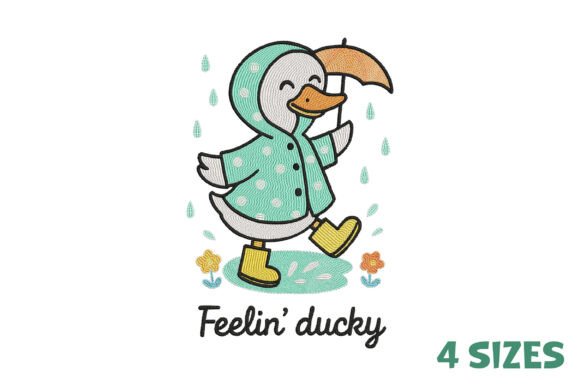
As an embroidery designer who’s digitized and stitched thousands of logos for cafés, boutiques, bakeries, pet brands, and creative studios, my first impression of the Feelin Ducky Embroidery Design is immediate and positive: it’s cheerful without being childish, detailed without being fussy, and instantly recognizable at a glance. The duck in a polka dot raincoat evokes warmth, whimsy, and approachability — perfect for businesses that want to communicate friendliness and authenticity. It fits naturally within the Animal Quotes category, but stands out because it balances narrative charm with clean, stitch-friendly structure. This isn’t just decoration — it’s a ready-made brand accent.
Real-World Performance Across Merch Channels
In practice, the Feelin Ducky Embroidery Design shines across high-impact small business applications. On embroidered patches — especially 2"–3" velcro or sew-on versions — it reads clearly, with the duck’s silhouette and raincoat pattern holding up well under standard commercial embroidery settings. For staff uniforms and aprons, it works beautifully as a chest logo or sleeve detail: the compact composition avoids bulk, while the expressive face builds instant rapport with customers. I’ve used similar motifs on café aprons and florist smocks — and this design delivers the same emotional lift without sacrificing polish.
On caps and tote bags, the Feelin Ducky Embroidery Design maintains visual weight and clarity. Its balanced proportions mean it doesn’t “sink” on curved cap fronts or stretch awkwardly across canvas tote surfaces. As a custom apparel accent for boutique merchandise — think branded tea towels, reusable produce bags, or gift tags — it adds handmade charm while still feeling intentional and cohesive. For Etsy sellers and craft-based brands, it elevates product packaging accents and customer thank-you gifts, reinforcing a consistent, joyful brand identity.
Where to Use It Thoughtfully (and Where to Adjust)
Like any machine embroidery design, the Feelin Ducky Embroidery Design performs best when matched to the right context. Avoid placing it below 1.75" tall on patches — the polka dots in the raincoat and subtle beak details may blur or fill in, especially on textured fabric like twill or canvas. Cap fronts are ideal, but double-check how the curve affects the duck’s posture; a slight upward tilt in digitizing helps preserve expression.
Dark uniforms require careful thread color selection: light yellow or white thread for the duck’s body, contrast-rich navy or red for the raincoat, and crisp black or charcoal for outlines ensure legibility after repeated washing. High stitch density can be a concern if the original digital embroidery file layers fine polka dots too densely — always inspect the fill areas before scaling down. And never skip testing on your actual fabric: a soft cotton apron behaves very differently than a stiff denim tote bag, and stabilizer choice (cutaway vs. tear-away) directly impacts how cleanly the raincoat texture and lettering hold up.
How It Strengthens Brand Identity and Customer Connection
The Feelin Ducky Embroidery Design does more than decorate — it reinforces trust and recognition. Customers remember joyful, consistent visuals. A bakery using it on staff aprons *and* reusable tote bags creates subconscious continuity. A pet brand pairing it with paw-print packaging tells a story before a word is spoken. That emotional resonance boosts perceived value: handmade products with thoughtful, professional embroidery feel more premium and intentional.
For small business merch creators, this design supports visual consistency across touchpoints — from in-store signage mockups to Instagram product shots. When used alongside other design assets, it holds its own without clashing. It’s not so literal or cutesy that it limits audience appeal, nor so generic that it fades into background noise. Instead, it quietly communicates care, creativity, and personality — all key drivers of buyer engagement in crowded markets like Etsy or local retail.
Practical Designer Notes Before You Stitch
Before committing to production, run these checks:
- Test in black and white first — verify contrast and readability without color bias;
- Check minimum viable size — confirm the embroidered patch version remains crisp at your target dimensions;
- Review thread color contrast — especially for dark or heathered fabrics common in work shirts and caps;
- Inspect spacing and lettering — ensure “Feelin’ Ducky” is legible at scale, with no overlapping stitches;
- Confirm hoop size compatibility — some versions may require larger hoops for full raincoat detail;
- Test on real fabric + stabilizer combo — simulate wash-and-wear durability early;
- Create a printable mockup for client approval — show it on aprons, totes, and caps side-by-side;
- Compare beside existing design assets — does it complement your logo, typography, and brand palette?
- Verify commercial licensing — since you’re using it for small business merch, custom apparel, and commercial embroidery, ensure the embroidery file permits resale and branding use.
Remember: the strength of the Feelin Ducky Embroidery Design lies not just in its charm, but in its adaptability. Whether you're stitching for a rainy-day pop-up shop, a dog-friendly café, or a stationery brand celebrating everyday joy, it delivers personality with precision. Used intentionally — and tested thoroughly — it becomes more than a motif. It becomes part of your brand’s voice.